Welcome to the Nexus of Ethics, Psychology, Morality, Philosophy and Health Care

Welcome to the nexus of ethics, psychology, morality, technology, health care, and philosophy

Sunday, January 5, 2020

The Big Change Coming to Just About Every Website on New Year’s Day

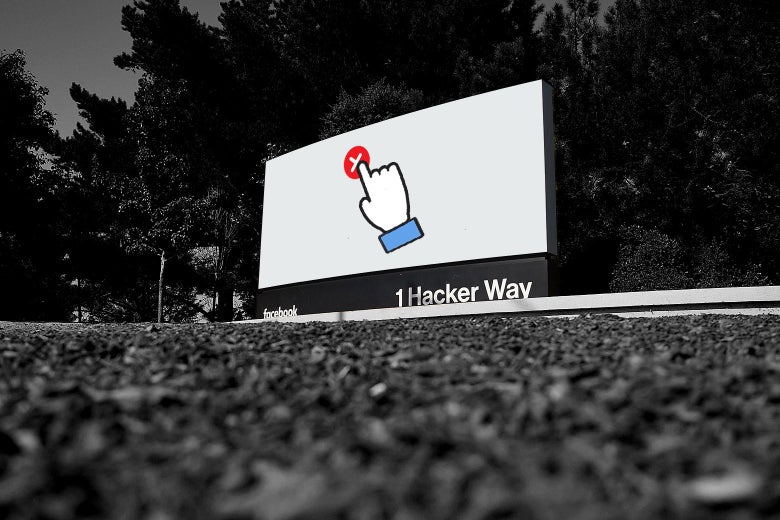
Facebook billboard with a hand cursor clicking an X.Aaron Mak
Slate.com
Originally published 30 Dec 19

Starting New Year’s Day, you may notice a small but momentous change to the websites you visit: a button or link, probably at the bottom of the page, reading “Do Not Sell My Personal Information.”

The change is one of many going into effect Jan. 1, 2020, thanks to a sweeping new data privacy law known as the California Consumer Privacy Act. The California law essentially empowers consumers to access the personal data that companies have collected on them, to demand that it be deleted, and to prevent it from being sold to third parties. Since it’s a lot more work to create a separate infrastructure just for California residents to opt out of the data collection industry, these requirements will transform the internet for everyone.

Ahead of the January deadline, tech companies are scrambling to update their privacy policies and figure out how to comply with the complex requirements. The CCPA will only apply to businesses that earn more than $25 million in gross revenue, that collect data on more than 50,000 people, or for which selling consumer data accounts for more than 50 percent of revenue. The companies that meet these qualifications are expected to collectively spend a total of $55 billion upfront to meet the new standards, in addition to $16 billion over the next decade. Major tech firms have already added a number of user features over the past few months in preparation. In early December, Twitter rolled out a privacy center where users can learn more about the company’s approach to the CCPA and navigate to a dashboard for customizing the types of info that the platform is allowed to use for ad targeting. Google has also created a protocol that blocks websites from transmitting data to the company, which users can take advantage of by downloading an opt-out add-on. Facebook, meanwhile, is arguing that it does not need to change anything because it does not technically “sell” personal information. Companies must at least set up a webpage and a toll-free phone number for fielding data requests.

The info is here.

Saturday, January 4, 2020

Robots in Finance Could Wipe Out Some of Its Highest-Paying Jobs

Lananh Nguyen
Bloomberg.com
Originally poste 6 Dec 19

Robots have replaced thousands of routine jobs on Wall Street. Now, they’re coming for higher-ups.

That’s the contention of Marcos Lopez de Prado, a Cornell University professor and the former head of machine learning at AQR Capital Management LLC, who testified in Washington on Friday about the impact of artificial intelligence on capital markets and jobs. The use of algorithms in electronic markets has automated the jobs of tens of thousands of execution traders worldwide, and it’s also displaced people who model prices and risk or build investment portfolios, he said.

“Financial machine learning creates a number of challenges for the 6.14 million people employed in the finance and insurance industry, many of whom will lose their jobs -- not necessarily because they are replaced by machines, but because they are not trained to work alongside algorithms,” Lopez de Prado told the U.S. House Committee on Financial Services.

During the almost two-hour hearing, lawmakers asked experts about racial and gender bias in AI, competition for highly skilled technology workers, and the challenges of regulating increasingly complex, data-driven financial markets.

The info is here.

Friday, January 3, 2020

Robotics researchers have a duty to prevent autonomous weapons

Christoffer Heckman
theconversation.com
Originally posted 4 Dec 19

Here is an excerpt:

As with all technology, the range of future uses for our research is difficult to imagine. It’s even more challenging to forecast given how quickly this field is changing. Take, for example, the ability for a computer to identify objects in an image: in 2010, the state of the art was successful only about half of the time, and it was stuck there for years. Today, though, the best algorithms as shown in published papers are now at 86% accuracy. That advance alone allows autonomous robots to understand what they are seeing through the camera lenses. It also shows the rapid pace of progress over the past decade due to developments in AI.

This kind of improvement is a true milestone from a technical perspective. Whereas in the past manually reviewing troves of video footage would require an incredible number of hours, now such data can be rapidly and accurately parsed by a computer program.

But it also gives rise to an ethical dilemma. In removing humans from the process, the assumptions that underpin the decisions related to privacy and security have been fundamentally altered. For example, the use of cameras in public streets may have raised privacy concerns 15 or 20 years ago, but adding accurate facial recognition technology dramatically alters those privacy implications.

The info is here.

Thursday, January 2, 2020

The Tricky Ethics of Google's Project Nightingale Effort

Cason Schmit
nextgov.com
Originally posted 3 Dec 19

The nation’s second-largest health system, Ascension, has agreed to allow the software behemoth Google access to tens of millions of patient records. The partnership, called Project Nightingale, aims to improve how information is used for patient care. Specifically, Ascension and Google are trying to build tools, including artificial intelligence and machine learning, “to make health records more useful, more accessible and more searchable” for doctors.

Ascension did not announce the partnership: The Wall Street Journal first reported it.

Patients and doctors have raised privacy concerns about the plan. Lack of notice to doctors and consent from patients are the primary concerns.

As a public health lawyer, I study the legal and ethical basis for using data to promote public health. Information can be used to identify health threats, understand how diseases spread and decide how to spend resources. But it’s more complicated than that.

The law deals with what can be done with data; this piece focuses on ethics, which asks what should be done.

Beyond Hippocrates

Big-data projects like this one should always be ethically scrutinized. However, data ethics debates are often narrowly focused on consent issues.

In fact, ethical determinations require balancing different, and sometimes competing, ethical principles. Sometimes it might be ethical to collect and use highly sensitive information without getting an individual’s consent.

The info is here.

Wednesday, January 1, 2020

Companies Are Judged More Harshly For Their Ethical Failures If The CEO Is A Woman

Emily Reynolds
British Psychological Society
Originally published 19 Nov 19

Gender inequality in the business world has been much discussed over the last few years, with a host of mentoring schemes, grants, business books and political activity all aimed at getting women into leadership positions.

But what happens when this goal is achieved? According to new research, unequal gender dynamics still prevail even at the very top. Nicole Votolato Montgomery and Amanda P. Cowen from the University of Virginia found that women CEOs are judged far more harshly than their male counterparts when a business fails ethically. However, when a failure is down to incompetence, they find, women receive less negative backlash.

(cut)

The team suggests that highlighting such traits in female leaders can “reduce the penalties for female-led organisations”. But others argue that women leaders shouldn’t give in to the pressure of adopting typically “male” traits, and that being helpful and community-focused are actually positive things to bring to the board room. Leaning into stereotypes may not be the best way, long-term, to break them — but either way, it’s clear there’s still a way to go for women in business.

The info is here.

Tuesday, December 31, 2019

Our Brains Are No Match for Our Technology

Tristan Harris
The New York Times
Originally posted 5 Dec 19

Here is an excerpt:

Our Paleolithic brains also aren’t wired for truth-seeking. Information that confirms our beliefs makes us feel good; information that challenges our beliefs doesn’t. Tech giants that give us more of what we click on are intrinsically divisive. Decades after splitting the atom, technology has split society into different ideological universes.

Simply put, technology has outmatched our brains, diminishing our capacity to address the world’s most pressing challenges. The advertising business model built on exploiting this mismatch has created the attention economy. In return, we get the “free” downgrading of humanity.

This leaves us profoundly unsafe. With two billion humans trapped in these environments, the attention economy has turned us into a civilization maladapted for its own survival.

Here’s the good news: We are the only species self-aware enough to identify this mismatch between our brains and the technology we use. Which means we have the power to reverse these trends.

The question is whether we can rise to the challenge, whether we can look deep within ourselves and use that wisdom to create a new, radically more humane technology. “Know thyself,” the ancients exhorted. We must bring our godlike technology back into alignment with an honest understanding of our limits.

This may all sound pretty abstract, but there are concrete actions we can take.

The info is here.

Monday, December 30, 2019

Privacy: Where Security and Ethics Miss the Mark

privacyJason Paul Kazarian
securityboulevard.com
Originally posted 29 Nov 19

Here is an excerpt:

Without question, we as a society have changed course. The unfettered internet has had its day. Going forward, more and more private companies will be subject to increasingly demanding privacy legislation.

Is this a bad thing? Something nefarious? Probably not. Just as we have always expected privacy in our physical lives, we now expect privacy in our digital lives as well. And businesses are adjusting toward our expectations.

One visible adjustment is more disclosure about exactly what private data a business collects and why. Privacy policies are easier to understand, as well as more comprehensive. Most websites warn visitors about the storage of private data in “cookies.” Many sites additionally grant visitors the ability to turn off such cookies except those technically necessary for the site’s operation.

Another visible adjustment is the widespread use of multi-factor authentication. Many sites, especially those involving credit, finance or shopping, validate login with a token sent by email, text or voice. These sites then verify the authorized user is logging in, which helps avoid leaking private data.

Perhaps the biggest adjustment is not visible: encryption of private data. More businesses now operate on otherwise meaningless cipher substitutes (the output of an encryption function) in place of sensitive data such as customer account numbers, birth dates, email or street addresses, member names and so on. This protects customers from breaches where private data is exploited via an all-too-common breach.

The info is here.

23 and Baby

Tanya Lewis
nature.com
Originally posted 4 Dec 19

Here are two excerpts:

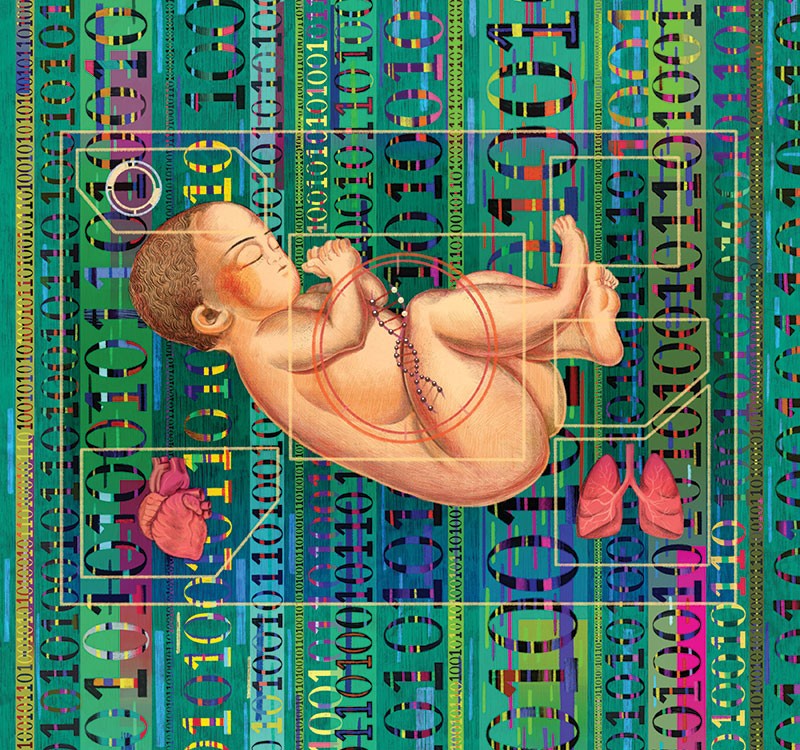
Proponents say that genetic testing of newborns can help diagnose a life-threatening childhood-onset disease in urgent cases and could dramatically increase the number of genetic conditions all babies are screened for at birth, enabling earlier diagnosis and treatment. It could also inform parents of conditions they could pass on to future children or of their own risk of adult-onset diseases. Genetic testing could detect hundreds or even thousands of diseases, an order of magnitude more than current heel-stick blood tests—which all babies born in the U.S. undergo at birth—or confirm results from such a test.

But others caution that genetic tests may do more harm than good. They could miss some diseases that heel-stick testing can detect and produce false positives for others, causing anxiety and leading to unnecessary follow-up testing. Sequencing children’s DNA also raises issues of consent and the prospect of genetic discrimination.

Regardless of these concerns, newborn genetic testing is already here, and it is likely to become only more common. But is the technology sophisticated enough to be truly useful for most babies? And are families—and society—ready for that information?

(cut)

Then there’s the issue of privacy. If the child’s genetic information is stored on file, who has access to it? If the information becomes public, it could lead to discrimination by employers or insurance companies. The Genetic Information Nondiscrimination Act (GINA), passed in 2008, prohibits such discrimination. But GINA does not apply to employers with fewer than 15 employees and does not cover insurance for long-term care, life or disability. It also does not apply to people employed and insured by the military’s Tricare system, such as Rylan Gorby. When his son’s genome was sequenced, researchers also obtained permission to sequence Rylan’s genome, to determine if he was a carrier for the rare hemoglobin condition. Because it manifests itself only in childhood, Gorby decided taking the test was worth the risk of possible discrimination.

The info is here.

Sunday, December 29, 2019

It Loves Me, It Loves Me Not Is It Morally Problematic to Design Sex Robots that Appear to Love Their Owners?

Sven Nyholm and Lily Eva Frank
Techné: Research in Philosophy and Technology
DOI: 10.5840/techne2019122110

Abstract

Drawing on insights from robotics, psychology, and human-computer interaction, developers of sex robots are currently aiming to create emotional bonds of attachment and even love between human users and their products. This is done by creating robots that can exhibit a range of facial expressions, that are made with human-like artificial skin, and that possess a rich vocabulary with many conversational possibilities. In light of the human tendency to anthropomorphize artifacts, we can expect that designers will have some success and that this will lead to the attribution of mental states to the robot that the robot does not actually have, as well as the inducement of significant emotional responses in the user. This raises the question of whether it might be ethically problematic to try to develop robots that appear to love their users. We discuss three possible ethical concerns about this aim: first, that designers may be taking advantage of users’ emotional vulnerability; second, that users may be deceived; and, third, that relationships with robots may block off the possibility of more meaningful relationships with other humans. We argue that developers should attend to the ethical constraints suggested by these concerns in their development of increasingly humanoid sex robots. We discuss two different ways in which they might do so.