Welcome to the Nexus of Ethics, Psychology, Morality, Philosophy and Health Care

Welcome to the nexus of ethics, psychology, morality, technology, health care, and philosophy
Showing posts with label Immorality. Show all posts

Saturday, April 26, 2025

Culture points the moral compass: Shared basis of culture and morality

Matsuo, A., & Brown, C. M. (2022).
Culture and Brain, 10(2), 113–139.

Abstract

The present work reviews moral judgment from the perspective of culture. Culture is a dynamic system of human beings interacting with their environment, and morality is both a product of this system and a means of maintaining it. When members of a culture engage in moral judgment, they communicate their “social morality” and gain a reputation as a productive member who contributes to the culture’s prosperity. People in different cultures emphasize different moral domains, which is often understood through the individualism-collectivism distinction that is widely utilized in cultural psychology. However, traditional morality research lacks the interactive perspective of culture, where people communicate with shared beliefs about what is good or bad. As a consequence, past work has had numerous limitations and even potential confounds created by methodologies that are grounded in the perspective of WEIRD (i.e., Western, Educated, Industrialized, Rich and Democratic) cultures. Great attention should be paid to the possibly misleading assumption that researchers and participants share the same understanding of the stimuli. We must address this bias in sampling and in the minds of researchers and better clarify the concept of culture in intercultural morality research. The theoretical and practical findings from research on culture can then contribute to a better understanding of the mechanisms of moral judgment.

The article is paywalled. So, I tried to give more of a summary. Here it is:

This article discusses moral judgment from a cultural perspective. The authors argue that morality is a product of culture and helps to maintain it. They claim that people from different cultures emphasize different moral domains, which is often understood using the individualism-collectivism distinction. The authors also suggest that traditional morality research lacks an interactive perspective of culture, where people communicate shared beliefs about what is good or bad, and that this past research has had limitations and potential confounds due to methodologies that are grounded in WEIRD cultures.    

The authors discuss theories of moral judgment, including Lawrence Kohlberg’s theory of stages of moral development, the social intuitionist model, and moral pluralism. They claim that moral judgment is a complex process involving self-recognition, social cognition, and decision-making and that the brain is designed to process multiple moralities in different ways. They also explore the social function of morality, stating that behaving morally according to the standards of one’s group helps people be included in the group, and moral norms are used to identify desirable and undesirable group membership.    

In a significant part of the article, the authors discuss the concept of culture, defining it as a structured system of making sense of the environment, which shapes individuals in order to fit into their environment. They explain that the need to belong is a basic human motivation, and people form groups as a means of survival and reproduction. Norms applied to a particular group regulate group members’ behaviors, and culture emerges from these norms. The authors use the individualism-collectivism dimension, a common concept in cultural psychology, to explain how people from different cultures perceive and interpret the world in different ways. They claim that culture is a dynamic interaction between humans and their environment and that moral judgment achieves its social function because people assume that ingroup members share common representations of what is right or wrong. 

Sunday, March 2, 2025

Multiple dimensions of immorality

Reid, A., & Happaney, K. (2024).
Ethics & Behavior, 1–21.

Abstract

We conducted a four-part study to map out the conceptual space of a diverse set of immoral items, including those that are extreme and/or intergroup (e.g. child sex abuse, genocide, slavery), with the goal of identifying attributes spontaneously used in moral judgment. In Part 1, we identified 56 immoral items. In Part 2, participants completed a similarity-based card sort task of the 56 immoral items. Multidimensional scaling (MDS) indicated that three-dimensional space was needed to capture the perceived differences among the items. In Part 3, regression analysis indicated that perceived similarity among the immoral items related to their commonness, objectivity, forgivability, and legality. In Part 4, regression analysis indicated that the configuration of immoral items corresponded to the amount of anger and disgust the items elicited and items’ perceived harmfulness. We attempt to synthesize these results and answer questions about the roles of anger, disgust, and harm in moral judgment.

The research is paywalled and a pdf is not available online. :(

The author kindly sent me a copy of the research.

Here are some thoughts:

This study delves into the intricate dimensions of immorality through a comprehensive four-part research approach. The study aimed to map the conceptual space of moral transgressions, including extreme examples such as child sex abuse, genocide, and slavery. Employing a unique methodology, the researchers used an unrestrained similarity-based card sort task combined with multidimensional scaling (MDS) to capture participants' intuitive moral judgments. By analyzing 56 immoral items, they identified three key dimensions necessary to capture the perceived differences among these transgressions. The findings revealed that the perceived similarity of immoral items was linked to critical attributes such as commonness, objectivity, forgivability, and legality. Additionally, the study found that the configuration of these items closely correlated with the levels of anger and disgust they elicited (moral emotions) as well as their perceived harmfulness (harm appraisal). This research aligns with the intuitionist approach to moral psychology, which posits that moral judgments are made quickly and intuitively, with justification following the initial judgment. Through their innovative methodology, Reid and Happaney provided valuable insights into the psychological foundations of moral judgments and the nuanced ways humans perceive and categorize immoral actions.

Monday, April 25, 2022

Morality just isn't Republicans' thing anymore

Steve Larkin
The Week
Originally posted 23 APR 22

Here is an excerpt:

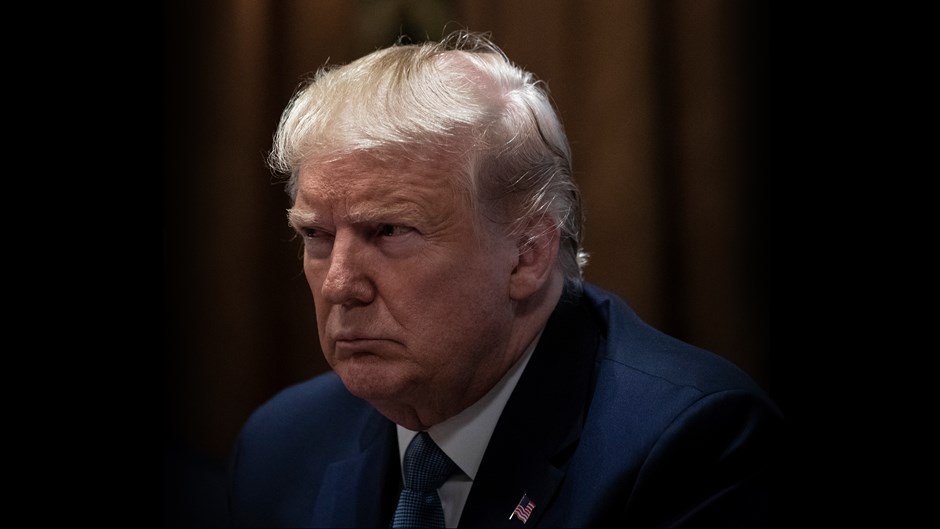
There is no understanding the Republican Party without understanding its leader and id, former President Donald Trump. His sins and crimes have been enumerated many times. But for the record, the man is a serial adulterer who brags about committing sexual assault with impunity, responsible for three cameo appearances in Playboy videos, dishonest in his business dealings, and needlessly callow and cruel. And, finally, he claims that he has never asked God for forgiveness for any of this.

Trump's presidency would seem to have vindicated the Southern Baptist Convention's claim that "tolerance of serious wrong by leaders sears the conscience of the culture, spawns unrestrained immorality and lawlessness in the society, and surely results in God's judgment." Of course, that was about former President Bill Clinton and the Monica Lewinsky scandal. Now, tolerating this sort of behavior in a leader is par for the Republican Party course.

And Trump seems to have set a kind of example for other stars of the MAGAverse: Rep. Matt Gaetz is under investigation for paying for sex with an underage girl and sex trafficking; former Missouri Gov. Eric Greitens, who was forced to resign that post after accusations that he tried to use nude photos to blackmail a woman with whom he had an affair, has not let that stop him from running for the Senate; Rep. Madison Cawthorn has been accused of sexual harassment and other misconduct by women who were his classmates in college.

Democrats, of course, have their own fair share of scandals, criminals, and cads, and they see themselves as being on the moral side, too. But they're not running around championing those "traditional values."

Why do Republicans thrill to Trump and tolerate misbehavior which previous generations — maybe even the very same people, a few decades ago — would have viewed as immediately disqualifying? (A long time ago, Ronald Reagan being divorced and remarried was a serious problem for a small but noticeable group of voters.) Maybe it's because, while Trump is an extreme (and rich) example, in many ways he's not so different from his devotees.

Saturday, December 21, 2019

Trump Should Be Removed from Office

Trump Should Be Removed from OfficeMark Galli
Christianitytoday.com
Originally posted 19 Dec 19

Here is an excerpt:

But the facts in this instance are unambiguous: The president of the United States attempted to use his political power to coerce a foreign leader to harass and discredit one of the president’s political opponents. That is not only a violation of the Constitution; more importantly, it is profoundly immoral.

The reason many are not shocked about this is that this president has dumbed down the idea of morality in his administration. He has hired and fired a number of people who are now convicted criminals. He himself has admitted to immoral actions in business and his relationship with women, about which he remains proud. His Twitter feed alone—with its habitual string of mischaracterizations, lies, and slanders—is a near perfect example of a human being who is morally lost and confused.

Trump’s evangelical supporters have pointed to his Supreme Court nominees, his defense of religious liberty, and his stewardship of the economy, among other things, as achievements that justify their support of the president. We believe the impeachment hearings have made it absolutely clear, in a way the Mueller investigation did not, that President Trump has abused his authority for personal gain and betrayed his constitutional oath. The impeachment hearings have illuminated the president’s moral deficiencies for all to see. This damages the institution of the presidency, damages the reputation of our country, and damages both the spirit and the future of our people. None of the president’s positives can balance the moral and political danger we face under a leader of such grossly immoral character.

The info is here.