Welcome to the Nexus of Ethics, Psychology, Morality, Philosophy and Health Care

Welcome to the nexus of ethics, psychology, morality, technology, health care, and philosophy
Showing posts with label Corporate Ethics. Show all posts

Monday, August 18, 2025

Meta’s AI rules have let bots hold ‘sensual’ chats with kids, offer false medical info

Jefff Horwitz
Reuters.com
Originally posted 14 Aug 25

An internal Meta Platforms document detailing policies on chatbot behavior has permitted the company’s artificial intelligence creations to “engage a child in conversations that are romantic or sensual,” generate false medical information and help users argue that Black people are “dumber than white people.”

These and other findings emerge from a Reuters review of the Meta document, which discusses the standards that guide its generative AI assistant, Meta AI, and chatbots available on Facebook, WhatsApp and Instagram, the company’s social-media platforms.

Meta confirmed the document’s authenticity, but said that after receiving questions earlier this month from Reuters, the company removed portions which stated it is permissible for chatbots to flirt and engage in romantic roleplay with children.


Here are some thoughts:

Meta’s AI chatbot guidelines show a blatant disregard for child safety, allowing romantic conversations with minors: a clear violation of ethical standards. Shockingly, these rules were greenlit by Meta’s legal, policy, and even ethics teams, exposing a systemic failure in corporate responsibility. Worse, the policy treats kids as test subjects for AI training, exploiting them instead of protecting them. On top of that, the chatbots were permitted to spread dangerous misinformation, including racist stereotypes and false medical claims. This isn’t just negligence: it’s an ethical breakdown at every level.

Greed is not good.
Thursday, June 27, 2019

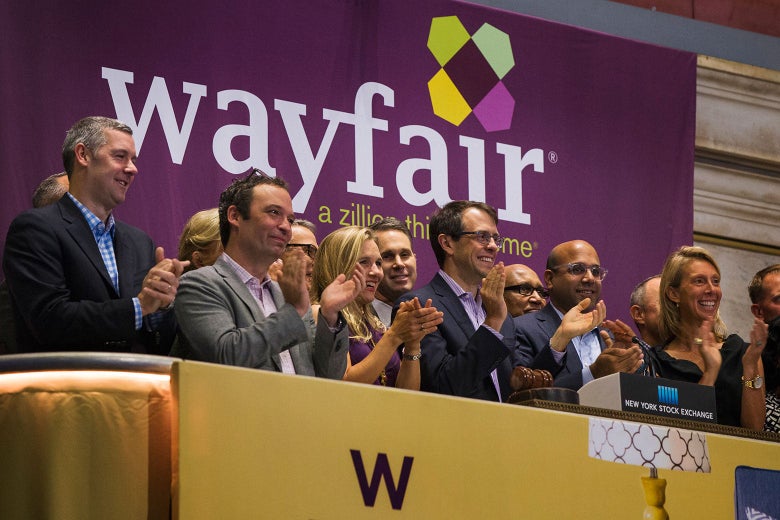
The Wayfair Walkout Is a Different Kind of Tech Worker Protest

From center, Wayfair co-chairmen and co-founders Steve Conine and Niraj Shah ring the opening bell of the New York Stock Exchange on Oct. 2, 2014.April Glaser
slate.com
Originally posted June 26, 2019

Here is an excerpt:

This time, the Wayfair employees went very public—and they did so during a week of renewed public outrage over the Trump administration’s border policies, thanks to reports of appalling conditions at a facility in Clint, Texas, holding migrant children who had been separated from their families. When Wayfair employees disrupt business on Wednesday by walking out, they’ll highlight that even a company best known for cheap sofas is entangled with a system that has split up families, locked asylum-seekers in cages, and detained children who have been found sick and without access to sufficient food or places to bathe.

This isn’t a typical use of organized labor, but it’s of a piece with the methods used by white-collar workers in the technology industry over the past two years. So far, the movement to force companies to oppose various activities of the Trump administration has had mixed success. Wayfair’s case suggests it will now grow beyond the very largest tech companies—and that employees are realizing signing a petition isn’t their only move.

The Wayfair protesters aren’t fighting to improve their own working conditions: They’re organizing to change their employer’s business practices. Google employees did this in 2018 with a petition that lead to the nonrenewal of a Department of Defense contract to build software systems for drones. Microsoft and Salesforce employees were less successful last year when they sent letters to their respective CEOs demanding they stop contracting with federal immigration agencies. More than 4,200 Amazon employees recently called on the company, unsuccessfully, to reduce its carbon footprint and stop offering cloud services to the oil and gas industry.

The info is here.

Tuesday, April 16, 2019

Rise Of The Chief Ethics Officer

Forbes Insight Team
Forbes.com
Originally posted March 27, 2019

Here is an excerpt:

Robert Foehl is now executive-in-residence for business law and ethics at the Ohio University College of Business. In industry, he’s best known as the man who laid the ethical groundwork for Target as the company’s first director of corporate ethics.

At a company like Target, says Foehl, ethical issues arise every day. “This includes questions about where goods are sourced, how they are manufactured, the environment, justice and equality in the treatment of employees and customers, and obligations to the community,” he says. “In retail, the biggest issues tend to be around globalism and how we market to consumers. Are people being manipulated? Are we being discriminatory?”

For Foehl, all of these issues are just part of various ethical frameworks that he’s built over the years; complex philosophical frameworks that look at measures of happiness and suffering, the potential for individual harm, and even the impact of a decision on the “virtue” of the company. As he sees it, bringing a technology like AI into the mix has very little impact on that.

“The fact that you have an emerging technology doesn’t matter,” he says, “since you have thinking you can apply to any situation.” Whether it’s AI or big data or any other new tech, says Foehl, “we still put it into an ethical framework. Just because it involves a new technology doesn’t mean it’s a new ethical concept.”

The info is here.